Candidates arrive at the Services Selection Board believing they are about to be tested on what they know. They are not. Over five days the board is assessing something much harder to revise for — and most of the marking has nothing to do with the answers you give.
In three decades of service, and during my tenure instructing at the Army War College, I have watched a great many bright young people fail this process. Very few of them failed because they were not clever enough. They failed because they had prepared for the wrong examination.
The written paper decides whether you are admitted to the conversation. The SSB decides whether the Army, Navy or Air Force is prepared to hand you responsibility for other people's lives. Those are entirely different questions, and they are assessed in entirely different ways.
The fifteen qualities
The board assesses candidates against fifteen Officer-Like Qualities. They are not secret; they have been published for decades. What candidates rarely appreciate is that the fifteen are grouped into four factors, and that a candidate is judged on the pattern across the factors, not on a total score.
| Factor | What it contains |
|---|---|
| Planning & Organising | Effective intelligence, reasoning ability, organising ability, power of expression |
| Social Adjustment | Social adaptability, cooperation, sense of responsibility |
| Social Effectiveness | Initiative, self-confidence, speed of decision, ability to influence the group, liveliness |
| Dynamic | Determination, courage, stamina |
Read that table again and notice what is absent. There is no quality called knowledge. There is no quality called marks. Effective intelligence appears — but that is the ability to solve a practical problem in front of you, not the ability to recall a syllabus.
Five days, three independent assessors
You are assessed by three people who do not confer until the end: the Interviewing Officer, the Psychologist, and the Group Testing Officer. Each sees you in a different setting, and the board takes the agreement between them seriously. A candidate who is impressive in the interview room and invisible on the ground has not passed — he has produced a contradiction, and contradictions are what the conference exists to resolve.
Day 1 — Screening
The Officer Intelligence Rating test, followed by the Picture Perception and Description Test. You are shown a hazy picture for about thirty seconds, write a story, and then discuss it in a group. Roughly half of every batch goes home on the first evening. The commonest reason is not a poor story — it is a candidate who spends the group discussion trying to be the loudest voice rather than the most useful one.
Day 2 — Psychology
Four tests, run at deliberate speed so that you cannot compose a careful, dishonest answer:
- Thematic Apperception Test — twelve pictures, the last one blank; a story for each in about four minutes.
- Word Association Test — sixty words, fifteen seconds per word.
- Situation Reaction Test — sixty everyday situations in thirty minutes.
- Self Description — what your parents, teachers, friends and you yourself would say about you.
The time pressure is the test. At fifteen seconds a word, you write what you actually think. Candidates who have memorised "positive" responses are transparent to a trained psychologist within the first dozen words, because a manufactured personality is never consistent across sixty of them.
Days 3 and 4 — Group Testing
The group discussion, group planning exercise, progressive group task, half group task, individual obstacles, command task, snake race, lecturette and final group task. This is where the board watches you rather than reads you.
The obstacle is not the test. What you do when someone else cannot cross it — that is the test.
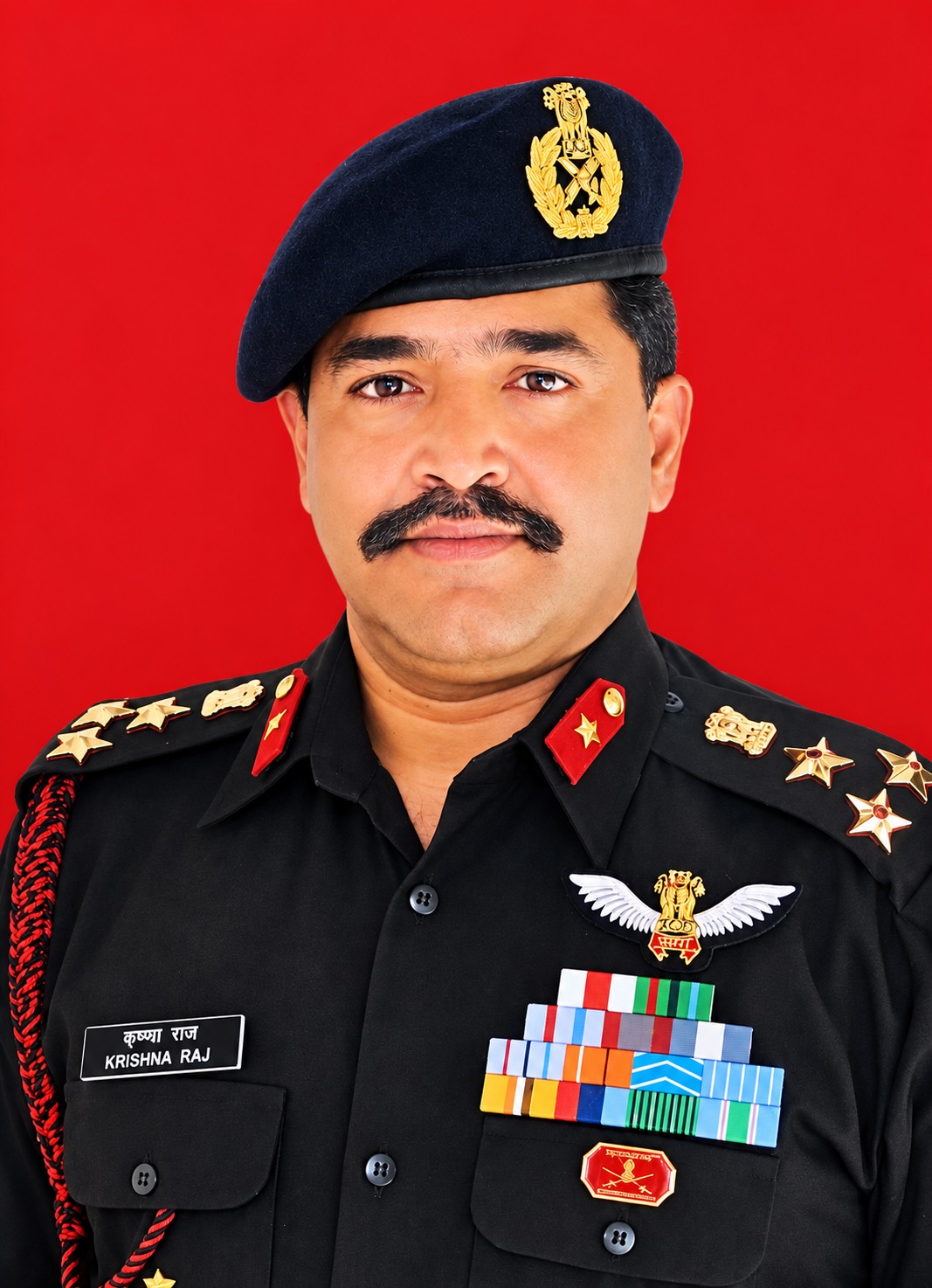
— Brigadier Krishna Raj
Day 5 — Conference
A few minutes in front of the full board, followed by the assessors' deliberation. By this point the decision is largely made. The conference confirms it.
The three mistakes that end most attempts
1. Performing instead of participating
The candidate who has read that the board rewards "initiative" spends four days manufacturing it — speaking first, seizing the plank, volunteering for everything. Group Testing Officers watch several hundred candidates a year. Manufactured initiative is obvious, and it reads as the opposite quality: a man who needs to be seen leading rather than one who wants the task completed.
2. Preparing answers rather than a life
The personal interview draws almost entirely on your own biography — your schooling, your friendships, your failures, what you did with your last two years. A candidate who has done nothing outside a classroom has nothing to draw on, and no amount of rehearsal will conceal it. Begin filling that gap a year before you apply, not a week.
3. Treating the group as the competition
There is no fixed number of vacancies in your batch. Every candidate in your group can be recommended, and on rare occasions every one is. The candidate who talks over his group has not defeated a rival; he has demonstrated poor cooperation in front of an officer whose job is to record exactly that.
What can actually be prepared
A great deal, but not by memorising. Physical stamina can be built. Current affairs — read daily, not crammed — gives you something to say in a lecturette and in the interview. Speaking clearly in front of a group is a skill, and it improves quickly with practice in front of people who will tell you the truth about your bearing.
And the honest self-assessment that the psychologist is looking for can be developed, though it is the slowest of the three. It begins with being told plainly where you stand, by someone with no reason to flatter you.
That is the part a candidate cannot do alone, and it is the reason our SSB training is conducted by officers who have sat on the other side of the table.